Craft a unique gift: Creating an Elegant Woodburned Keepsake Box
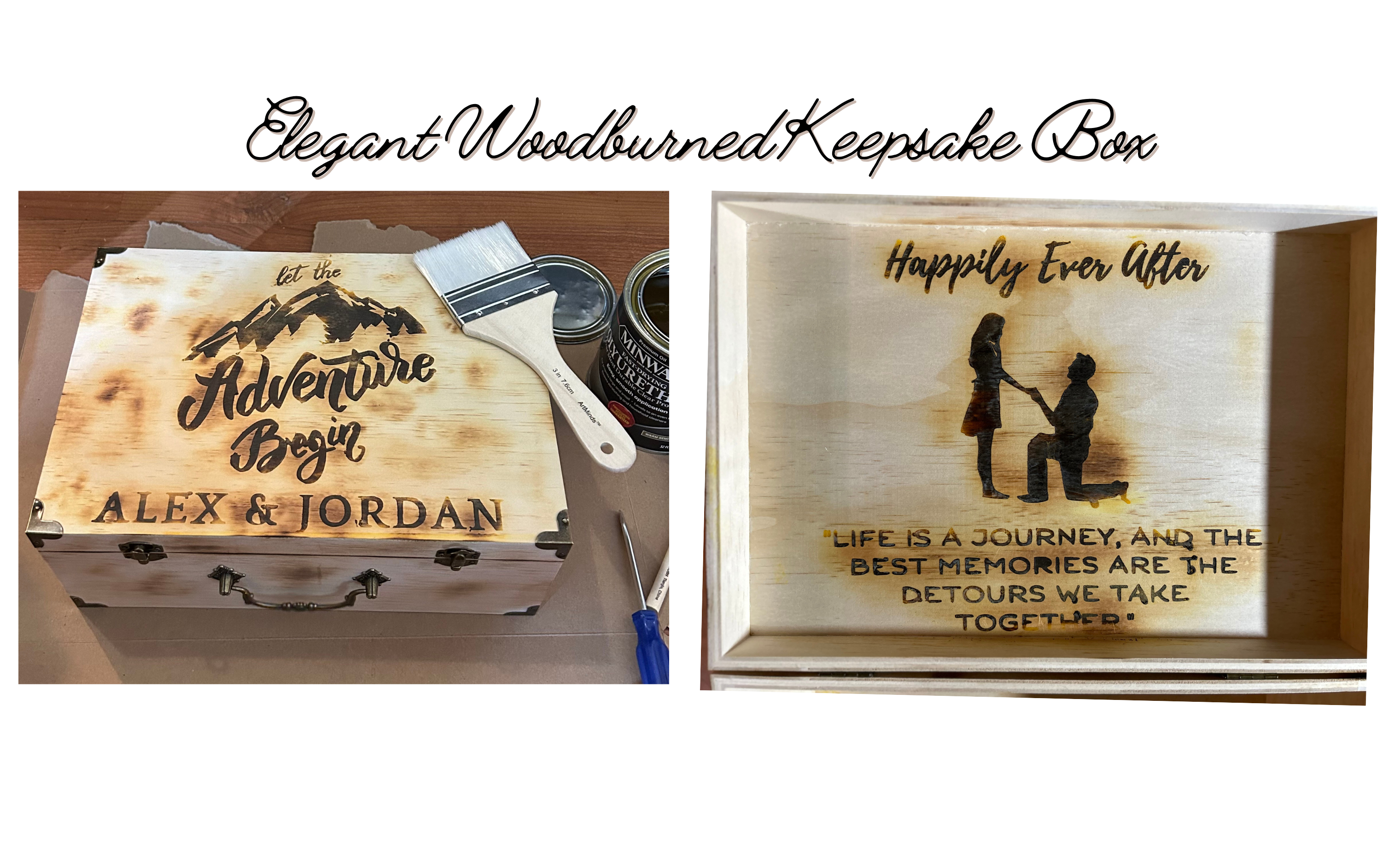


Table of Contents
- Why a Handcrafted Woodburned Box is a Gift from the Heart
- The Magic of Pyrography: Chemical vs. Traditional Wood Burning
- Gathering Your Supplies for the Perfect Burn
- Your Step-by-Step Guide to a Flawless Woodburned Box
- The Grand Finale: Sealing and Protecting Your Masterpiece
- Troubleshooting Common Wood Burning Blunders
- Recommended Tools & Resources
- What Our DIY Community is Saying
- Frequently Asked Questions
- People Also Ask
Introduction
I’ll never forget the first handmade gift I ever received. It wasn’t flashy or expensive. It was a small, slightly crooked picture frame made by my grandfather, with my name clumsily carved into the side. To this day, it’s one of my most cherished possessions. There’s an undeniable magic in a gift crafted by hand—it carries a piece of the creator’s time, intention, and love that no store-bought item can ever replicate.
That’s the exact feeling I want to help you create with this guide to making your own DIY woodburned keepsake box. Forget generic gifts that are forgotten in a week. A personalized, woodburned box is a timeless treasure, a beautiful and functional piece of art that can hold jewelry, photos, letters, or any precious mementos. It’s the perfect gift for weddings, anniversaries, graduations, or just to show someone you care. It’s a conversation starter, a piece of decor, and a vessel for memories all in one.
In this comprehensive guide, we’re going to walk through every single step of the process, from choosing the right wood to applying the final protective coat. I’ll be focusing on the chemical wood burning method, which is incredibly beginner-friendly and yields stunningly crisp results without needing the steady hand of a seasoned artist. We’ll cover design inspiration, stencil creation, the burning process itself, and how to troubleshoot any little hiccups along the way. By the end, you won’t just have a beautiful box; you’ll have a new skill and the confidence to create personal, heartfelt gifts for years to come.
Recommended Tools & Resources
This post contains affiliate links. If you use these links to buy something, we may earn a commission. Thanks.
- Scorch Marker Pro – Chemical Wood Burning Pen & Heat Gun Kit – Find on Amazon
- Unfinished Wood Boxes with Hinged Lid (Set of 3) – Find on Amazon
- Cricut Maker 3 – Smart Cutting Machine – Find on Amazon
Money-Saving Tip!
Before you buy, sign up for Rakuten (formerly Ebates) to get cash back on your purchases from many online stores. It’s a free and easy way to save money on your projects! Sign up here!
Why a Handcrafted Woodburned Box is a Gift from the Heart
In a world of mass-produced goods and two-day shipping, the act of creating something by hand is a powerful statement. It says, ‘I thought of you, I spent time on this, and I made it just for you.’ A woodburned keepsake box is the embodiment of this sentiment. It’s more than just a container; it’s a personalized vessel for memories. Imagine gifting a box to a newly married couple, burned with their monogram and wedding date, to hold cards and mementos from their special day. Or creating a box for a new parent with the baby’s name, birthdate, and a sweet design to store their first booties and hospital bracelet. The possibilities are truly endless.
What I love most about this project is its incredible versatility. The same basic technique can be adapted to fit any style or occasion. For a rustic, nature-loving friend, you could burn a delicate floral or woodland creature design. For someone with modern taste, a crisp geometric pattern or a simple, elegant monogram would be perfect. You can even burn a favorite quote, a line from a poem, or an inside joke onto the lid. The box itself becomes a reflection of the recipient’s personality and your relationship with them.
Beyond the sentiment, these boxes are also incredibly practical. They can be used to organize jewelry on a dresser, store tea bags in the kitchen, hold treasured photographs on a bookshelf, or even serve as a unique ‘memory box’ for ticket stubs and souvenirs. It’s a gift that won’t be shoved in a closet; it will be displayed and used, a constant reminder of the care that went into its creation. The process itself is also deeply rewarding. There’s a certain meditative quality to preparing the wood, applying the design, and watching the pattern magically appear with the heat. It’s a wonderful way to unplug and create something beautiful and tangible with your own two hands. Much like tending to a garden, where patience and care lead to beautiful blooms, this craft requires a similar focus that is both calming and fulfilling.
The Magic of Pyrography: Chemical vs. Traditional Wood Burning
Before we dive into the ‘how-to,’ let’s talk about the ‘what.’ Pyrography, the art of decorating wood with burn marks, has been around for centuries. Traditionally, this was done with a heated metal tool, much like a pen, to freehand draw designs onto a wood surface. This method offers incredible artistic freedom but has a steep learning curve. It requires a very steady hand, control over temperature and pressure, and a good bit of practice to achieve clean lines.
Then there’s the modern marvel we’ll be using: chemical wood burning. This technique is a game-changer, especially for beginners or those who want to create intricate, precise designs. Instead of a heated pen, you use a special chemical solution or gel (often containing ammonium chloride) that is applied to the wood. When heat is applied to the area—usually with a high-powered heat gun—the chemical reacts with the wood fibers and burns them, revealing the design. The result is a crisp, clean, and consistent burn that looks remarkably professional.

Pros of Chemical Wood Burning:
* Beginner-Friendly: If you can trace a stencil, you can do this. It removes the need for expert-level drawing skills.
* Precision: Using a vinyl stencil (which we’ll discuss in detail) allows for incredibly intricate and sharp-edged designs that are difficult to achieve by hand.
* Consistency: The burn is typically very even, without the variations in depth and darkness that can happen with a traditional tool.
* Speed: For complex or repeating patterns, applying a stencil and solution is often much faster than burning each line by hand.
Cons of Chemical Wood Burning:
* Less Artistic Freedom for Shading: While you can get some variation, it’s harder to achieve the subtle shading and textural effects possible with a traditional tool.
* Ventilation is Key: You are working with chemicals and heat, so a well-ventilated workspace is non-negotiable.
For this project, the chemical method is our go-to. It allows us to focus on creating a beautiful design and guarantees a stunning result, making it the perfect entry point into the wonderful world of pyrography. It’s a project that’s accessible to everyone, regardless of your artistic background. The precision it offers is similar to the care needed when you are dividing dahlia tubers; both tasks require careful preparation and a methodical approach for the best outcome.
Your Step-by-Step Guide to a Flawless Woodburned Box
Alright, let’s get our hands dusty and make some magic happen! I’ve broken down the process into clear, manageable steps. Remember, crafting is supposed to be fun, so put on some music, relax, and enjoy the journey.
### Step 1: The Soul of the Project – Your Design
This is where the personalization begins. Don’t rush this step! A thoughtful design is what elevates your box from a craft project to a cherished heirloom. Think about the person you’re making it for. What are their passions? Do they have a favorite flower, animal, or symbol? Perhaps a meaningful date or a short quote? If you’re feeling stuck, browse sites like Pinterest or Etsy for ‘wood burning patterns’ to spark inspiration. For this project, I’m a huge fan of using a cutting machine like a Cricut or Silhouette to create a vinyl stencil. It’s the secret to getting those impossibly sharp lines. You can find thousands of designs (called SVG files) online, or create your own in a program like Canva or Adobe Illustrator. When choosing a design, remember that designs with slightly thicker lines tend to show up better. Very fine, delicate details can sometimes get lost or burn together.
### Step 2: Prepare Your Canvas – The Wooden Box
Your final burn will only be as good as your prep work. Most unfinished craft boxes have a slightly rough surface. We need to make it silky smooth. Start with a medium-grit sandpaper (around 120-grit) and sand the entire surface of the box, especially the lid where your design will go. Always sand in the direction of the wood grain. This prevents scratching. After the initial pass, wipe away the dust with a tack cloth or a slightly damp paper towel. Then, move to a fine-grit sandpaper (220-grit or higher) for a final, polishing sand. The surface should feel incredibly smooth to the touch. This step is critical because it prevents the chemical solution from ‘bleeding’ into the wood grain, which causes fuzzy lines. A smooth surface ensures a crisp burn. 
### Step 3: Flawless Transfer – Applying Your Stencil
Once your box is prepped and your design is cut from vinyl, it’s time for the transfer. This is a delicate operation where patience pays off. First, ‘weed’ your vinyl design. This means removing all the pieces of vinyl that are part of your design, leaving the negative space behind to form your stencil. Then, apply transfer tape over the top of the weeded vinyl. Use a scraper tool (a credit card works in a pinch) to burnish the transfer tape firmly onto the vinyl. Carefully peel the backing off the vinyl, making sure the vinyl stencil sticks to the transfer tape. Now, position the stencil on your box. Take your time to get it perfectly centered and straight. Once you’re happy with the placement, press it down firmly, starting from the center and working your way out. Burnish the vinyl onto the wood, paying extra attention to all the inside edges of your design. This creates a tight seal to prevent any solution from seeping underneath. Slowly peel away the transfer tape, leaving just the vinyl stencil on the wood.
### Step 4: The Chemical Reaction – Applying the Solution
Now for the science part! Shake your wood-burning marker or solution well. Apply a thin, even layer of the solution within the open areas of your stencil. I find that using a small paintbrush or a foam applicator gives me more control than applying it directly from a pen-style marker. You don’t want to glob it on; a thin layer is all you need. Too much solution is the number one cause of bleeding. Use a light touch and ‘paint’ the solution onto the wood. Once you’ve covered the entire design, let it sit for a few minutes to absorb into the wood fibers, then use a paper towel to gently blot away any excess liquid pooling on the surface. Now, you can carefully remove the vinyl stencil. Don’t wait for it to dry completely, as this can make the vinyl harder to remove. Pull it off slowly and at an angle. You’ll be left with a faint, almost invisible outline of your design. Don’t worry, this is exactly what you want!
### Step 5: Bringing it to Life – The Heat Application
This is the most satisfying step! Put on your safety glasses. Set your heat gun to a high setting (usually around 400°C or 750°F). Hold the heat gun about 4-6 inches away from the surface of the wood and keep it constantly moving in a slow, sweeping motion. Don’t hold it in one spot for too long, as this can scorch the wood around your design. Within seconds, you’ll see the magic happen. The areas where you applied the solution will start to darken, turning from a light tan to a rich, dark brown. Continue applying heat evenly across the entire design until you reach your desired level of darkness. It’s better to build up the color slowly with multiple passes than to try and get it dark all at once. The transformation is truly amazing to watch! This project is a fantastic activity for a quiet afternoon, perfect for those who enjoy working in smaller spaces, much like how how to grow dahlias in pots brings the joy of gardening to a patio or balcony.
The Grand Finale: Sealing and Protecting Your Masterpiece
You’ve done the hard work, and your design looks incredible. Now, we need to protect it. Sealing the box not only protects the wood and the burned design from dirt, moisture, and fading, but it also enhances the natural beauty of the wood grain, making the entire piece look richer and more professional. You have a few options for finishing, each with a slightly different look and feel.

* Polyurethane (Water-Based or Oil-Based): This is my top recommendation for durability. It creates a hard, protective film over the wood. Water-based polyurethane dries clear and quickly with low odor, making it great for indoor use. Oil-based polyurethane has a slight amber tint that can add warmth to the wood, but it takes longer to dry and has a stronger smell. To apply, use a foam brush to apply a thin, even coat in the direction of the wood grain. Let it dry completely according to the manufacturer’s instructions (usually a few hours). Then, lightly sand the surface with super-fine sandpaper (320-grit or higher) to knock down any bumps, wipe away the dust, and apply a second coat. Two to three coats will give you a beautiful, durable finish.
* Mineral Oil or Tung Oil: If you prefer a more natural, satin finish that you can feel the wood through, an oil finish is a great choice. It penetrates the wood rather than sitting on top of it. Simply apply the oil liberally with a soft, lint-free cloth, let it soak in for about 15-20 minutes, and then wipe away all the excess with a clean cloth. The grain will pop, and the burned design will look deep and rich. You may need to reapply oil every year or so to maintain the protection.
* Paste Wax: For a very soft, matte finish, paste wax is a classic option. It provides some moisture resistance and feels wonderful to the touch. Apply a thin layer with a cloth, let it haze over, and then buff it to a gentle sheen with a clean cloth. It’s a beautiful, traditional finish, though less durable than polyurethane.
No matter which finish you choose, make sure your burned design is completely cool and the box is free of any dust before you begin. Allow the final coat to cure fully (this can take anywhere from 24 hours to a few days, check the product label) before you handle it or place any items inside. This final step is the crowning touch that turns your project into a lasting work of art.
Troubleshooting Common Wood Burning Blunders
Even with the best preparation, sometimes things don’t go exactly as planned. Don’t panic! Most common issues are easily preventable or fixable. Here are some of the problems I encountered when I was starting out and how to deal with them.
* The Problem: Fuzzy or Bleeding Lines. Your crisp design looks blurry around the edges. This is the most common issue and is almost always caused by the chemical solution seeping into the wood grain under your stencil.
* The Fix/Prevention: The key is preparation. First, make sure you’ve sanded your wood to a very smooth finish (at least 220-grit). A smoother surface has less open grain for the liquid to travel into. Second, ensure your vinyl stencil is burnished down *extremely* well, especially on the inside edges. Third, use the solution sparingly. A thin, painted-on layer is all you need. If you do get a small bleed, you can sometimes minimize its appearance by lightly sanding the affected area with very fine sandpaper before you apply the final sealant.
* The Problem: The Burn is Too Light or Uneven. Some parts of your design are dark and rich, while others are pale.
* The Fix/Prevention: This usually comes down to two things: inconsistent application of the solution or uneven heating. When applying the solution, make sure you have an even, thin coat everywhere. When using the heat gun, keep it moving constantly and make several slow passes over the entire design rather than trying to perfect one area at a time. If one spot is too light, you can try to focus a bit more heat on it, but be careful not to scorch the surrounding wood.
* The Problem: Scorch Marks Outside the Design. You have dark, burned spots on the wood where you didn’t want them.
* The Fix/Prevention: This happens when the heat gun is held too close to the wood or stays in one spot for too long. Always keep the gun 4-6 inches away and in constant motion. If you do get a small scorch mark, you can often remove it by sanding. Start with a medium-grit sandpaper and work the area until the mark is gone, then blend it in by sanding with progressively finer grits. It’s a bit like garden maintenance; sometimes you have to prune and tidy up to get the best results. A little bit of careful effort goes a long way, whether you’re sanding a scorch mark or getting ready for the season by reading a beginner’s guide to growing dahlias.
* The Problem: The Vinyl Stencil Tore or Lifted. While applying or removing the stencil, a piece ripped or didn’t stick properly.
* The Fix/Prevention: Use good quality vinyl and a sharp blade in your cutting machine. When applying, make sure the wood surface is completely clean and dust-free. If a small piece of the stencil lifts while you’re applying the solution, you can try to press it back down, but it’s often better to stop, clean the area, and start with a fresh stencil to avoid a messy outcome. Remember, patience is your best tool in any DIY project.
What Our DIY Community is Saying
“I was so intimidated by wood burning, but this chemical method is a total game-changer! I followed this guide and made a gorgeous anniversary box for my husband. He thought I bought it from a fancy boutique. Thank you for making it so easy!”
“The troubleshooting section saved me! My first attempt had some fuzzy lines, but after reading the tips about sanding and using less solution, my second box came out perfectly crisp. This is my new favorite way to make personalized gifts.”
“I’ve never considered myself artistic, but I made a beautiful box for my daughter’s graduation using a stencil of her university’s logo. Your step-by-step photos were incredibly helpful. It’s the most meaningful gift I’ve ever given.”
Frequently Asked Questions
What is the best type of wood for this project?
Soft, light-colored woods with a fine, closed grain work best. Woods like Basswood, Poplar, Birch, and Pine are excellent choices. They are easy to sand smooth and provide a great, light-colored ‘canvas’ for your design to pop. Avoid open-grained woods like Oak or Ash, as the solution is more likely to bleed along their heavy grain lines.
Is the chemical wood burning solution safe to use indoors?
It is crucial to work in a well-ventilated area. While the solution itself may not have a strong odor, applying high heat will create fumes. Open a window, use a fan to circulate air, or work in a garage with the door open. Always read and follow the safety instructions on the specific product you are using.
Can I do this without a Cricut or other cutting machine?
Absolutely! While a cutting machine makes intricate stencils easy, you can use other methods. You can buy pre-made adhesive stencils, or use a graphite transfer paper to trace your design onto the wood and then carefully fill it in with a fine-tipped wood-burning solution pen. The results can be just as beautiful.
How do I clean my brushes after using the wood burning solution?
Most chemical wood burning solutions are water-based. You should be able to clean your brushes, applicators, and any spills with simple soap and water. Be sure to clean them promptly after use before the solution has a chance to dry.
People Also Ask
How do you transfer a pattern to wood for burning?
The most popular methods are creating a vinyl stencil with a cutting machine (as detailed in this guide), using graphite transfer paper to trace a printed design, or using pre-made adhesive stencils. For the chemical method, a sealed stencil is best to prevent bleeding.
How do you seal wood after burning?
To protect your design and the wood, you should apply a sealant. Popular choices include water-based or oil-based polyurethane for maximum durability, tung oil or mineral oil for a natural satin finish, or paste wax for a soft, matte look. Always apply the sealant in thin, even coats in a dust-free environment.
Can you use a hair dryer for chemical wood burning?
No, a standard hair dryer does not get hot enough to trigger the chemical reaction needed for the wood to burn. You need a high-temperature heat gun that can reach at least 400°C (750°F) to properly activate the solution and create the burned effect.
What happens if you put too much scorch marker on wood?
Applying too much chemical wood burning solution (like from a Scorch Marker) is the leading cause of blurry or ‘bleeding’ lines. The excess liquid soaks into the wood fibers and spreads beyond the lines of your stencil, resulting in a fuzzy, undefined final burn.
Conclusion
Creating a DIY woodburned keepsake box is so much more than just another craft project. It’s an opportunity to pour your creativity and affection into a tangible object that will be cherished for years. By following these steps, you can create a professional-quality, deeply personal gift that truly comes from the heart. From the thoughtful design process to the magical moment the burn appears, it’s a rewarding experience from start to finish. Now that you have the knowledge, I can’t wait to see what you create. What design are you thinking of for your first woodburned box? Share your ideas in the comments below!