The Ultimate Stain Removal Guide: From Oil to Wine
Table of Contents
- The Enemy Within: A Quick Primer on Stain Science
- Your Stain Removal Arsenal: Essential Tools & Solutions
- The Cardinal Rules of Stain Removal (Violate at Your Peril!)
- The Stain-Busting Playbook: How to Tackle Common Culprits
- Level Up: Advanced Tactics for Stubborn & Set-In Stains
- Your Secret Weapon: The Free Printable Stain Removal Chart
Introduction
That night, after a frantic and semi-successful cleanup attempt, I vowed to become a stain removal expert. I was tired of that sinking feeling, of relegating a favorite piece of clothing to the ‘pajama pile’ because of one clumsy moment. I dove into research, tested countless concoctions, and learned the science behind what makes stains stick and, more importantly, what makes them disappear. I discovered that with the right knowledge and a few simple household ingredients, almost any stain can be conquered.
This guide is the culmination of all that trial and error. It’s the post I wish I’d had on that fateful dinner party night. We’re going to demystify the process, breaking down the different types of stains and the specific ‘kryptonite’ for each. We’ll cover everything from everyday spills like coffee and grass to dreaded disasters like ink and oil. And to make your life even easier, I’ve created a comprehensive, free printable stain removal chart that you can stick right inside your laundry room cabinet for quick reference. Say goodbye to stain-induced panic and hello to laundry confidence. Let’s get started!
Your Stain Removal Arsenal: Essential Tools & Solutions
This post contains affiliate links. If you use these links to buy something, we may earn a commission. Thanks.
- Distilled White Vinegar – Find on Amazon
- Baking Soda – Find on Amazon
- Hydrogen Peroxide (3%) – Find on Amazon
- Rubbing Alcohol (70% Isopropyl) – Find on Amazon
- Blue Dawn Dish Soap – Find on Amazon
- Enzyme-Based Cleaner (for pet/organic stains) – Find on Amazon
- Oxygen Bleach (like OxiClean) – Find on Amazon
- Soft-Bristled Brushes – Find on Amazon
- White Microfiber Cloths – Find on Amazon
The Enemy Within: A Quick Primer on Stain Science
Let’s break them down:
* **Tannin Stains:** Think of things that come from plants. This category includes wine, coffee, tea, fruit juice, berries, and even grass. These stains are essentially plant-based dyes. Their weakness? Mild acids like vinegar or lemon juice, and sometimes gentle detergents. They often respond poorly to bar soap, which can actually set the stain, so steer clear of that old wives’ tale.
* **Oil-Based Stains (Grease):** These are your classic kitchen culprits: cooking oil, salad dressing, butter, mayonnaise, and car grease. Water alone won’t touch these because, as we all learned in science class, oil and water don’t mix. You need something that can break down and surround the oil molecules so they can be washed away. This is where a good degreasing dish soap, like Blue Dawn, is your absolute best friend. Absorbent powders like cornstarch or baking soda are also fantastic for pulling the grease out of the fibers before you even start washing.
* **Protein-Based Stains:** This category includes anything that comes from a person or animal. We’re talking blood, sweat, vomit, dairy products (milk, cheese), and egg. The number one rule for protein stains is **NO HEAT**. Hot water will literally cook the protein, causing it to bind permanently to the fabric fibers. Always start with cold water. The secret weapon against these stains is an enzyme cleaner. Enzymes are biological catalysts that break down the specific protein molecules, essentially ‘eating’ the stain away.
* **Dye Stains:** These can be the trickiest. They include ink, food coloring, and dye transfer from other clothing. The goal here is to use a solvent that can dissolve the dye without harming the fabric’s original color. Rubbing alcohol is often effective for ink, while oxygen bleach is a great color-safe option for many dye-based food stains.
Understanding these categories transforms you from a frantic stain-scrubber into a strategic stain-fighter. When a new stain appears, your first question shouldn’t be ‘What do I use?’ but rather, ‘What *is* this?’ Once you identify it as a tannin, oil, protein, or dye stain, you’ll know exactly which tool to pull from your arsenal.
`
 `
`The Cardinal Rules of Stain Removal (Violate at Your Peril!)
**1. Act Fast:** Time is your greatest enemy. The longer a stain sits, the more time it has to penetrate deep into the fabric fibers and form chemical bonds. Fresh stains are infinitely easier to remove than old, set-in ones. The moment a spill happens, spring into action. Scrape off any solids and begin blotting immediately.
**2. Blot, Don’t Rub:** This is the most common mistake people make. Your first instinct might be to grab a cloth and scrub furiously at the spot. Don’t do it! Rubbing grinds the staining substance deeper into the fabric and can fray the fibers, creating a worn-looking patch. Worse, it spreads the stain, turning a small spot into a giant mess. Instead, take a clean, white cloth and gently blot the stain, pressing down to absorb as much of the liquid as possible. `
 `
`**3. Always Test First:** I learned this the hard way on a beautiful silk blouse. I applied a stain remover directly to a prominent spot without testing, and it left a permanent watermark that was worse than the original stain. Always, always test your chosen cleaning solution on an inconspicuous area first, like an inside seam or hem. Apply a small amount, wait a few minutes, and then blot with a white cloth to check for any color transfer or damage.
**4. Work from the Outside In:** When you start treating the stain, begin at the outer edge and work your way toward the center. This technique prevents the stain from spreading and creating a ‘ring’ around the original spot. By containing the stain, you make it much easier to lift out completely.
**5. Fear the Heat:** Heat is the ultimate stain-setter, especially for protein and unknown stains. Never use hot water on a fresh stain, and **never, ever put a stained garment in the dryer** unless you are 100% certain the stain is gone. The high heat of the dryer will bake the stain into the fabric, making it nearly impossible to remove later. Always air-dry the item first to inspect your work. If the stain remains, you can live to fight another day and treat it again. If you toss it in the dryer, it’s game over. Before you treat any garment, be sure to consult its care tag.
`
 `
`The Stain-Busting Playbook: How to Tackle Common Culprits
### Red Wine & Coffee (Tannin Stains)
That dreaded red wine spill doesn’t have to be a catastrophe.
1. **Blot Immediately:** Use a clean, dry cloth to absorb as much of the liquid as possible.
2. **Apply an Absorbent:** Liberally cover the stain with salt or baking soda. This will help draw even more of the wine out of the fibers. Let it sit for 5-10 minutes. You’ll see it turn pink as it works.
3. **Flush with Cold Water:** Rinse the stain from the *back* of the fabric. This pushes the stain out rather than further in.
4. **Treat and Launder:** Gently rub a small amount of liquid laundry detergent or a paste of oxygen bleach and water into the stain. Launder as usual in the warmest water the fabric will allow. For coffee or tea, a simple solution of equal parts white vinegar and water applied before laundering works wonders. `
 `
`### Grease & Oil
I once dripped olive oil vinaigrette down the front of a brand new pair of jeans. I thought they were ruined, but this method saved them.
1. **Scrape & Absorb:** If there’s any solid residue (like butter), gently scrape it off. Then, cover the stain completely with an absorbent powder like cornstarch, baking soda, or even baby powder. Let it sit for at least 30 minutes to an hour to soak up the grease.
2. **Brush and Treat:** Brush off the powder. Apply a generous amount of a grease-cutting dish soap (Blue Dawn is the gold standard) directly to the stain.
3. **Work it In:** Use your fingers or a soft-bristled brush to gently work the soap into the fibers. You should see it start to break up the grease.
4. **Wash in Hot Water:** Launder the item in the hottest water safe for the fabric. The heat helps to dissolve and wash away the remaining oil. Check for any remaining stain before drying!
### Blood (Protein Stains)
Remember the golden rule: COLD WATER ONLY.
1. **Rinse Immediately:** Hold the fabric under cold running water to flush out as much of the blood as possible.
2. **Apply Hydrogen Peroxide:** For light-colored fabrics, apply a small amount of 3% hydrogen peroxide directly to the stain. It will bubble as it reacts with the blood and lifts it. Use with caution on dark fabrics as it can have a mild bleaching effect (always test first!). For a gentler alternative, an enzyme cleaner is perfect. `
 `
`3. **Soak if Needed:** For stubborn stains, soak the garment in a basin of cold water with a scoop of oxygen bleach for 30 minutes before laundering.
### Ink (Dye Stains)
1. **Protect the Back:** Place a paper towel or old cloth under the stain to prevent it from bleeding through to the other side of the garment.
2. **Apply a Solvent:** Saturate a cotton ball with rubbing alcohol (isopropyl alcohol) or an alcohol-based hand sanitizer.
3. **Blot, Blot, Blot:** Dab at the ink stain with the saturated cotton ball. Don’t rub! You’ll see the ink transfer from the fabric to the cotton ball. Use fresh cotton balls as needed until no more ink is transferring.
4. **Rinse and Launder:** Once the ink is gone, rinse the area with cold water and launder as usual.
Level Up: Advanced Tactics for Stubborn & Set-In Stains
One of my greatest victories was against a set-in mystery stain on a vintage linen tablecloth I found at a flea market. It was a faint yellow-brown, and I had no idea what it was or how long it had been there. My secret weapon? A long, patient soak in an oxygen bleach solution. This is my go-to method for stubborn organic and tannin stains on durable fabrics.
**The Power Soak Method:**
1. Find a clean bucket, basin, or use your bathtub.
2. Fill it with warm water (or cold, for delicate fabrics).
3. Add a generous scoop or two of a powdered oxygen bleach, like OxiClean. Stir to dissolve it completely.
4. Submerge the entire garment in the solution, ensuring the stained area is fully saturated.
5. Let it soak. And I mean *soak*. For really tough, set-in stains, this can mean anywhere from 4 hours to overnight. Patience is key.
6. After soaking, gently wring out the garment and launder as usual. You will be amazed at what this method can lift out. `
 `
`**Creating a Stain-Fighting Paste:**
For concentrated power on a specific spot, you can create a paste. This works well for things like ground-in dirt on knees or dingy collars. Mix a small amount of powdered oxygen bleach with just enough water to form a thick paste. Apply the paste directly to the stain, gently rubbing it in with a soft brush. Let it sit for 30-60 minutes before washing. You can also do this with a mixture of baking soda and hydrogen peroxide for a powerful, homemade alternative.
**Upholstery and Carpet Considerations:**
When dealing with stains on items you can’t just toss in the wash, the rules change slightly. The biggest danger is over-saturating the fabric, which can lead to water rings or damage the padding underneath. Use cleaning solutions sparingly, applying them with a cloth rather than pouring directly. After treating, it’s crucial to ‘rinse’ the area by blotting with a cloth dampened with clean water. Finally, blot the area with a dry towel, pressing firmly to absorb as much moisture as possible. You can even place a heavy book on top of the dry towel for an hour to aid absorption.
Your Secret Weapon: The Free Printable Stain Removal Chart
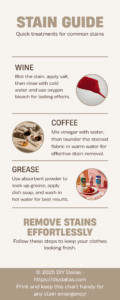
Think of this as your first responder in any stain emergency. It’s a beautifully designed, easy-to-read chart that you can download and print right at home. When a spill happens, you can quickly consult the chart, grab the right supplies, and get to work with confidence. It’s like having a stain removal expert on call 24/7.
`
 `
`Frequently Asked Stain-Fighting Questions
Can I just use chlorine bleach on all tough stains?
Absolutely not! Chlorine bleach is a very harsh chemical that should be used with extreme caution. It’s only safe for sturdy, all-white fabrics like cotton and linen. Using it on colored fabrics will permanently remove the dye, and it can damage delicate fibers like wool, silk, and spandex. For most stains and colors, a color-safe oxygen bleach (like OxiClean) is a much safer and more versatile alternative.
What’s the best all-purpose stain remover I can make at home?
A fantastic and simple all-purpose stain remover can be made by mixing equal parts blue Dawn dish soap and 3% hydrogen peroxide in a spray bottle. For a gentler version, mix one part distilled white vinegar with three parts water and a single drop of dish soap. This vinegar solution is great as a pre-treater for many common food stains.
The stain is old and I’ve already washed and dried it. Is it hopeless?
Not necessarily! While a set-in stain that’s been through the dryer is very difficult to remove, it’s not always impossible. Your best bet is the ‘Power Soak Method’ described in the advanced techniques section. Soaking the garment overnight in a strong oxygen bleach solution can often break down and lift old, stubborn stains. It may take a couple of tries, but it’s worth the effort before giving up on a favorite item.
Why did a stain on my couch reappear after I cleaned it?
This common and frustrating phenomenon is called ‘wicking.’ When you clean an upholstery stain, the moisture travels down into the cushion’s padding, dissolving dirt that was trapped deep inside. As the surface fabric dries, this dirty water is ‘wicked’ back up to the surface, causing the stain to reappear, often larger than before. To prevent this, use as little cleaning solution as possible and make sure to thoroughly blot the area with a clean, dry towel after treatment to absorb as much moisture as you can.