
The Ultimate Guide to Dividing Dahlia Tubers
Table of Contents
- Why Bother Dividing Dahlia Tubers?
- The Perfect Timing: When to Divide Your Tubers
- Anatomy of a Dahlia Tuber Clump: Know Before You Cut
- Essential Tools for Tuber Division
- Step-by-Step: How to Divide Dahlia Tubers Like a Pro
- Post-Division Care: Storing Your New Tubers
- Troubleshooting Common Division Problems
- From Our Dahlia Community
- Your Division Questions, Answered
- People Also Ask
Introduction
I still remember the first time I faced a giant, muddy dahlia clump, clutching a garden knife with a sense of impending doom. It looked like an alien octopus, and the idea of cutting it apart felt like horticultural sacrilege. What if I killed it? What if I cut in the wrong place? I’d spent all season nurturing this plant, and the thought of destroying my precious tuber stock was terrifying. That first attempt was clumsy, slow, and I’m sure I wasted a few viable tubers. But from that one clump, I ended up with five healthy new plants the following year, and a wave of confidence washed over me. I had unlocked a new level of dahlia growing.
That feeling is exactly what I want to share with you today. Dividing dahlia tubers is, without a doubt, one of the most intimidating tasks for a new dahlia enthusiast, but it’s also the most rewarding. It’s the secret to multiplying your collection for free, ensuring robust and healthy plants, and having plenty to share with friends and neighbors. It transforms you from someone who simply grows dahlias into a true dahlia custodian, actively participating in the lifecycle of these incredible flowers.
This guide is designed to banish that fear and replace it with confidence. We’re going to break down the entire process, from understanding the anatomy of the tuber clump to making the final, precise cut. We’ll cover when to divide, what tools you need, and exactly what to look for—especially those elusive ‘eyes.’ By the end of this article, you’ll see a tangled clump of tubers not as a challenge, but as an opportunity for abundance. Let’s get our hands dirty and turn one plant into many.
Essential Tools for Tuber Division
This post contains affiliate links. If you use these links to buy something, we may earn a commission. Thanks.
- Sharp Bypass Pruners – Find on Amazon
- Hori Hori Garden Knife – Find on Amazon
- Scalpel or Craft Knife Set – Find on Amazon
- Durable Garden Gloves – Find on Amazon
- Plastic Cutting Board (dedicated for garden use) – Find on Amazon
- Garden Marker Pen (waterproof) – Find on Amazon
- Plant Labels/Tags – Find on Amazon
- Garden Sulfur Powder – Find on Amazon
- Spray Bottle with Isopropyl Alcohol (for sterilizing tools) – Find on Amazon
Money-Saving Tip!
Before you buy any new tools, sign up for Rakuten (formerly Ebates) to get cash back on your purchases from many online stores. It’s a free and easy way to save money on your gardening projects! Sign up here!
Why Bother Dividing Dahlia Tubers?
Before we dive into the ‘how,’ let’s solidify the ‘why.’ It might seem like an optional, fussy step, but dividing dahlia tubers is fundamental to their long-term health and your garden’s success. Skipping this crucial task can lead to diminishing returns year after year.
First and foremost, division promotes plant vigor. An undivided dahlia clump becomes a dense, crowded mass of tubers. When you plant this, it sends up a thicket of weak, competing stalks. All these stalks fight for the same limited resources—water, sunlight, and nutrients. This intense competition results in a plant that is often leggy, produces smaller and fewer blooms, and is more susceptible to pests and diseases like powdery mildew. By dividing the clump, you give each new plant its own space and resources to develop a strong root system and robust stalks, leading to bigger, better flowers.
Second, division is the key to multiplication. Every single tuber you successfully divide is a clone of the parent plant, ready to become a brand-new, full-sized dahlia. That one expensive ‘Café au Lait’ tuber you bought can become five, ten, or even more plants in just a couple of seasons. This is how you affordably fill a garden bed, create stunning mass plantings, or build a collection of coveted varieties without breaking the bank. It also means you have plenty to share with fellow gardeners, trade for new varieties, or even sell if you choose.
Third, it’s a critical health check. The process of dividing forces you to inspect each tuber individually. You’ll be able to identify and discard any tubers that are rotten, diseased, or damaged. Planting a whole clump with even one rotten tuber can introduce pathogens into your soil and risk the health of the entire plant. Division is your annual quality control process, ensuring only the healthiest stock goes back into your garden. It’s an integral part of your overall dahlia winter care routine, setting the stage for a successful season before it even begins.
Finally, a smaller, single tuber often produces a stronger plant than a massive clump. This might sound counterintuitive, but a single tuber with a strong shoot focuses all its energy into developing one or two primary stalks. These stalks grow thick and strong, capable of supporting large, show-stopping blooms. A giant clump, as mentioned, produces many weaker shoots. Think of it as quality over quantity. By dividing, you are directing the plant’s energy in the most efficient way possible to achieve the results every dahlia grower dreams of.
The Perfect Timing: When to Divide Your Tubers
In the world of dahlias, one of the great debates is whether to divide tubers in the fall, right after digging them up, or in the spring, just before planting. The truth is, both methods work, and each has its own set of advantages and disadvantages. The best choice for you may depend on your climate, your storage conditions, and your personal preference.
### Dividing in the Fall
Pros:
* The Job is Done: Many gardeners prefer to get all the messy work out of the way at once. You dig, wash, divide, and store, and then you’re free until spring.
* Easier to Cut: The tubers are plump and firm, having just come out of the ground, which can make them easier to cut through than spring tubers that may have softened slightly.
* Less Storage Space: You are storing individual, trimmed tubers rather than bulky, soil-caked clumps, which can save a significant amount of space.
Cons:
* Eyes are Dormant: The biggest challenge with fall division is that the ‘eyes’ (the growth nodes for next year’s plant) are often dormant and very difficult, if not impossible, to see. This can lead to guesswork and potentially creating divisions without a viable eye.
* Higher Risk of Rot: Each cut you make creates a wound. These open surfaces are more susceptible to rot and dehydration during the long winter storage period.
### Dividing in the Spring
Pros:
* Visible Eyes: This is the game-changer. After a few months in storage, and especially when brought into a slightly warmer environment for a week or two, the eyes begin to swell and show themselves as small, pink or purple nubs. This allows you to make precise, confident cuts, ensuring every division is viable.
* Less Time in a Vulnerable State: The freshly cut tubers are stored for a much shorter period before planting, reducing the window for them to dry out or rot.
Cons:
* A Big Spring Chore: Spring is already a busy time in the garden, and adding the task of dividing dozens of tuber clumps can be overwhelming.
* Tubers Can Be Softer: Tubers may have lost some moisture over the winter, making them a bit softer and requiring a more delicate touch when cutting.
The DIYDalias Recommendation: For beginners, we overwhelmingly recommend dividing in the spring. The ability to clearly see the eyes removes almost all the guesswork and dramatically increases your success rate. The anxiety of cutting ‘blind’ in the fall can be a major barrier. As you become more experienced, you may experiment with fall division, but starting in the spring is the surest path to success. The timing of division is closely linked to knowing when to dig up dahlia tubers; for spring dividers, you’ll dig in the fall, store the whole clump, and then tackle the division work in March or April.
Anatomy of a Dahlia Tuber Clump: Know Before You Cut
To successfully divide a dahlia clump, you must first understand its anatomy. It’s not as simple as cutting any potato-like piece off the main mass. A viable division must have all the necessary parts to sprout and grow. Think of it like a puzzle where each piece has a specific role. Cutting without this knowledge is like performing surgery without knowing where the organs are.
Let’s break down the key components:
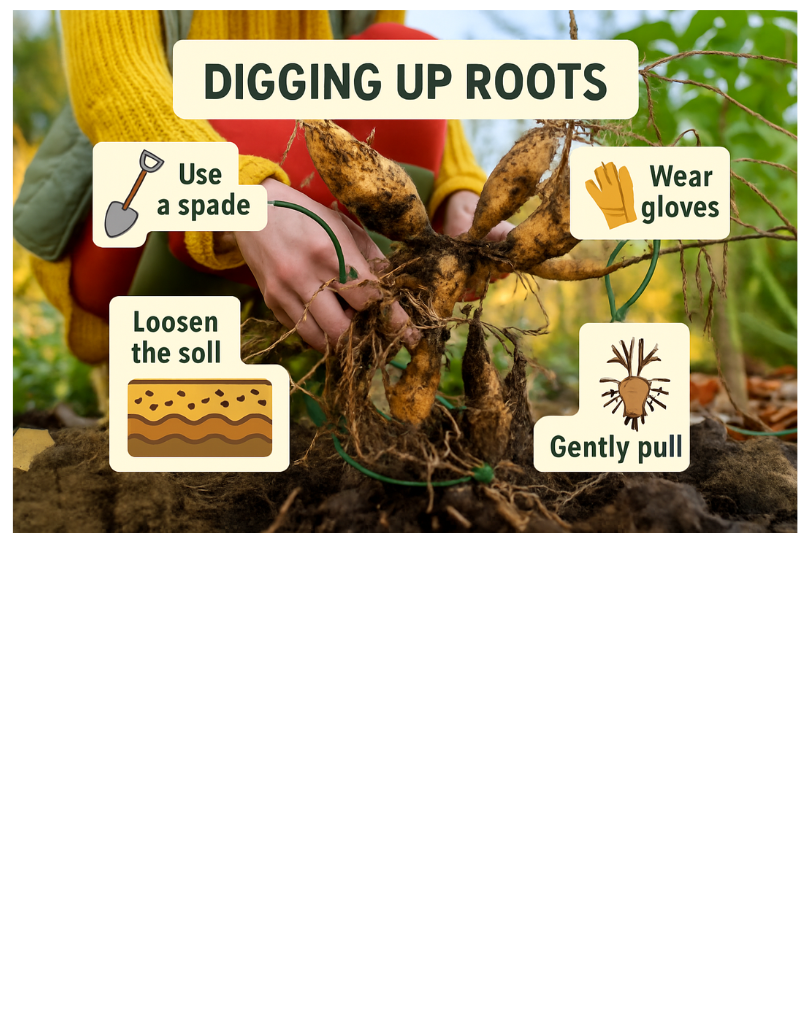
* The Mother Tuber: This is the original tuber you planted last spring. It will often be darker, more wrinkled, and may even be partially rotted. Its job is done. It provided the initial energy to start the plant, but it will not produce eyes and is not useful for future growth. It should be identified and discarded during the division process.
* The Storage Tubers: These are the new, plump, potato-like structures that grew during the season. Their primary function is to store food (in the form of inulin) to fuel the plant’s growth next spring. A tuber on its own is just a food source; it cannot grow a new plant without the other essential parts.
* The Neck: This is the thin, fragile part that connects a storage tuber to the central stalk or crown. The neck is the lifeline, allowing the tuber’s stored energy to travel to the growing point. If the neck is broken or shriveled, the tuber is useless, even if it looks plump and healthy. Handle with care!
* The Crown: This is the solid area at the top of the clump where the old stalk from last season emerges. The crown is the most critical part of the entire clump because it is the only place where the growth eyes will form. It’s the central hub from which all new life springs.
* The Eyes: These are the most important and often most elusive parts. An eye is a small, raised bud on the crown that will sprout into a new dahlia stalk. They often look like little pink, purple, or white bumps, similar to the eyes on a potato, but much smaller. Sometimes they are just a tiny dot of a different color. No eye, no plant. It’s that simple. Every single one of your divisions *must* have at least one eye attached to a piece of the crown, which is in turn attached to a healthy tuber with an intact neck.
Before you ever pick up your knife, take a few minutes to orient yourself with each clump. Identify the old stalk, trace it down to the crown, and look for the connection points of the individual tubers. This pre-assessment will make the actual cutting process much more logical and far less intimidating. Understanding this anatomy is the foundation of successful dahlia division.
Step-by-Step: How to Divide Dahlia Tubers Like a Pro
Alright, it’s time to transform that tangled clump into a tray of perfect future flowers. Take a deep breath, gather your sterilized tools, and let’s get started. We’ll go through this process one step at a time.
Step 1: Clean and Prep the Clump
Whether you’re dividing in fall or spring, start with a clean clump. If it’s fresh from the ground, use a gentle spray from a hose to wash away all the dirt. Be careful not to use a high-pressure jet, which can damage the delicate necks. If you’re dividing in spring, your stored clump should already be mostly clean. Trim away all the fine, hair-like roots and cut the old, dead stalk down to about 2-3 inches above the crown. This ‘handle’ will help you manipulate the clump.
Step 2: Wake Up the Eyes (Spring Division Only)
This is the secret to making spring division so much easier. About 1-2 weeks before you plan to divide, bring your stored clumps out of their cool, dark storage and into a warmer, brighter location (like a garage or basement with a window). You can place them in a shallow tray with a bit of slightly damp potting soil or peat moss. This change in temperature and humidity signals the tubers to start waking up, and the eyes will begin to swell and become much more visible.

Step 3: Make a Plan of Attack
Now, with visible eyes, you can strategize. The goal isn’t just to cut tubers apart; it’s to create viable divisions, each with a tuber, a neck, a piece of crown, and an eye. The easiest way to start with a large, dense clump is to cut it in half. Look for a natural separation point and use your strongest tool, like a Hori Hori knife or sturdy pruners, to split the entire crown down the middle. This immediately makes the clump more manageable and gives you a better view of the interior connections.
Step 4: Isolate Individual Divisions
Working with your halved clumps, identify a single tuber with a clear eye (or a cluster of eyes) above it on the crown. Your cut will be through the crown itself. You are not cutting the tuber; you are cutting the piece of crown that is attached to the tuber. Using a sharp scalpel or craft knife for precision, make a firm cut to separate your target division from the rest of the clump. The final piece should look like a little hammer: the tuber is the head, the neck is the handle, and the piece of crown with the eye is where you would strike.
Step 5: Trim and Tidy
Once you have a division, give it a quick trim. Snip off any long, dangly bits of root. If the tuber is excessively long, you can trim the non-neck end. Most importantly, identify and discard the old mother tuber. It’s often mushy or woody and serves no purpose. This is also when you’ll discard any tubers with broken necks or signs of rot. Don’t be afraid to be ruthless—quality over quantity is the mantra here. One perfect tuber is better than five questionable ones.
Step 6: Label Immediately!
This step is non-negotiable if you have more than one variety. As soon as you create a viable division, write the variety name on the tuber itself with a waterproof garden marker. Trust me, you will not remember which is which later. For a more permanent solution, you can also create a plastic plant tag for each variety’s storage bin.
Step 7: Dust with Sulfur (Optional)
Some gardeners like to dust the freshly cut surfaces of the crown with horticultural sulfur powder. Sulfur has anti-fungal properties and can help to ‘cauterize’ the wound, preventing rot from setting in during storage. Simply dip the cut surface into a small amount of sulfur. This is more critical if you are dividing in the fall for long-term storage.
Post-Division Care: Storing Your New Tubers
Congratulations, the hard part is over! You’ve successfully divided your dahlia clumps. But the job isn’t quite finished. Proper storage of these new divisions is just as important as the cutting itself. Improper storage can undo all your hard work, leading to shriveled or rotten tubers.
Immediately after dividing and labeling, the tubers need to ‘cure’ for a day or two. This allows the cut surfaces to dry and form a protective callus. Simply lay them out in a single layer on a piece of cardboard or newspaper in a cool, dry place that’s protected from direct sun and frost. A garage or shed is perfect.
Once cured, it’s time to pack them away for their winter nap (if divided in fall) or for the few weeks until planting (if divided in spring). The goal of storage is to find a perfect balance: you want to keep them from drying out and shriveling, but also prevent them from being so moist that they rot. The ideal storage environment is cool, dark, and with some humidity—think around 40-50°F (4-10°C).
There are many methods for storing tubers, and you may need to experiment to find what works best for your specific conditions. For a comprehensive breakdown of different techniques using various materials like peat moss, wood shavings, and vermiculite, be sure to read our detailed guide on how to store dahlia tubers. This guide covers the pros and cons of each method and will help you choose the right one for your climate and space.
No matter which method you choose, it’s crucial to check on your tubers periodically. Once a month, take a quick peek inside your storage container. Look for any signs of mold or rot and immediately remove any affected tubers to prevent it from spreading. Also check for shriveling. If the tubers look like sad, wrinkled prunes, your storage medium is too dry. You can lightly spritz the medium with a spray bottle of water to reintroduce a small amount of moisture. Finding this balance is the art of good tuber storage.
Properly storing your newly divided tubers ensures that when it’s time for planting, you have healthy, viable stock ready to thrive. This final step completes the cycle that begins with digging and ends with beautiful blooms in your garden.
Troubleshooting Common Division Problems
Even with the best instructions, you’re bound to run into a few tricky situations, especially during your first few attempts at dividing tubers. Don’t panic! Most problems are common and have simple solutions. Here’s a guide to troubleshooting the most frequent issues.
Problem: “I can’t find any eyes!”
This is the number one fear for beginners. If you’re dividing in the fall, this is normal. The eyes are dormant. You can either take your best guess, ensuring each tuber has a solid piece of the crown attached, or you can choose to store the whole clump and wait until spring. If it’s spring and you still can’t see them, give the clump more time to ‘wake up.’ Place it in a slightly warmer, more humid spot for another week. Sometimes, a light misting with water can encourage the eyes to pop. Be patient; they will eventually show themselves.
Problem: “I accidentally broke the neck of a beautiful, plump tuber!”
It happens to everyone. Unfortunately, a tuber with a broken or detached neck is no longer viable. The connection to the crown (where the eye is) has been severed, so the tuber’s energy stores cannot be used to grow a plant. It’s heartbreaking, but that tuber must go to the compost pile. This is why a gentle hand is so important when handling the clump.
Problem: “My division has a tuber and an eye, but the tuber is tiny.”
Size isn’t everything! A small, finger-sized tuber with a viable eye and a healthy neck will grow into a full-sized, productive dahlia plant. The tuber’s only job is to provide the initial energy to get the plant started. Once the plant develops its own root system, it will support itself and grow new tubers for the following year. Don’t discard small tubers if they are otherwise healthy. This is one of the key lessons you learn when you start dividing dahlia tubers regularly.
Problem: “I made a cut and realized the division has no eye.”
Don’t despair. If you still have the main clump, look closely at where you made the cut. You might be able to re-cut, taking a larger piece of the crown that does include an eye. If you’ve already separated it completely and it definitely has no eye, that piece is not viable. Consider it a learning experience and move on. Every gardener makes a few bad cuts.
Problem: “Some of my tubers look shriveled or have a bit of mold.”
If a tuber is slightly shriveled but still firm, it is likely still viable and will plump up once planted in moist soil. If it’s completely dry and lightweight, it’s a goner. For mold, if it’s just a small spot of surface mold, you can often wipe it off with a paper towel dipped in a diluted bleach or hydrogen peroxide solution. Let it dry completely before storing. If the tuber is soft, mushy, or has extensive mold, discard it immediately to prevent it from spreading to your healthy stock. This is a critical part of the process before you how to plant dahlia tubers in the spring.
From Our Dahlia Community
“I was so scared to divide my tubers for the first time, but this guide gave me the confidence to try. I turned my three ‘Kelgai Ann’ clumps into over 20 new plants! My garden has never looked so full.”
“The tip about waiting for the eyes to sprout in the spring was a game-changer. I’d struggled with fall division for years, guessing where the eyes were. This year, I had a nearly 100% success rate. Thank you!”
“The anatomy section with the photo was incredibly helpful. I finally understood what a ‘viable’ tuber actually meant. I’ve shared this post with all my gardening friends.”
Your Division Questions, Answered
How many divisions can I expect to get from one clump?
This varies wildly depending on the dahlia variety and the growing conditions of the previous season. A small, first-year clump might only yield 2-4 divisions. A large, established clump of a prolific tuber-maker could yield 10, 15, or even more.
What do I do with the original ‘mother’ tuber?
The mother tuber has done its job and its energy is spent. It will not grow a new plant. It is often shriveled, woody, or even rotting. You should always discard the mother tuber and only keep the new, plump tubers that grew during the season.
Can I just plant the whole clump without dividing it?
You can, but it’s not recommended. Planting a whole clump will result in a dense mass of weak, competing stalks. This leads to a less vigorous plant with smaller, fewer blooms, and it increases the risk of rot and disease. Dividing ensures a healthier, more productive plant.
Is it really better to divide in the spring than in the fall?
For beginners, yes, absolutely. The ability to see the sprouted eyes in the spring removes all the guesswork and dramatically increases your success rate. Experienced growers may prefer the convenience of fall division, but starting with spring division is the best way to learn and build confidence.
What’s the absolute minimum for a viable tuber division?
A viable division must have three things: 1) A healthy storage tuber with an unbroken neck. 2) A piece of the original crown attached to that neck. 3) At least one visible eye or growth bud on that piece of crown. Without all three, it will not grow.
People Also Ask
What happens if you don’t divide dahlia tubers?
If you don’t divide dahlia tubers, the clump will grow larger and more congested each year. This leads to increased competition among the stalks for resources, resulting in weaker plants, smaller and fewer flowers, and a higher susceptibility to diseases. Eventually, the center of the clump may begin to rot.
How do you find the eyes on a dahlia tuber?
Dahlia eyes are small growth buds located only on the ‘crown’ of the tuber clump, near where the old stalk grew. They often appear as small, slightly raised bumps and can be pink, purple, or white. The best way to see them is to let the clump warm up in the spring, which encourages the eyes to swell and ‘wake up.’
Can you cut a dahlia tuber in half?
You cannot cut a single dahlia tuber in half and expect both pieces to grow, like you can with a potato. The growth ‘eyes’ are only on the crown. A piece of tuber without a piece of the crown and an eye attached will never sprout. The division process involves separating tubers from the main clump, not cutting individual tubers.
How soon after dividing dahlia tubers can you plant them?
After dividing, you should let the tubers ‘cure’ for a couple of days to allow the cut surfaces to dry and form a callus. This prevents rot. After this curing period, you can plant them directly into the garden if the soil is warm enough (at least 60°F / 15.5°C) and all danger of frost has passed.
Conclusion
Stepping into the world of dahlia tuber division is a true rite of passage for any gardener. It’s a skill that pays you back tenfold, transforming your garden from a place of simple enjoyment into a sustainable source of beauty and abundance. By mastering this process, you ensure the health of your plants, multiply your favorite varieties for free, and gain a deeper understanding of the incredible life cycle of dahlias. Remember that first clumsy attempt I told you about? Now, dividing tubers is one of my favorite late-winter rituals, filled with the promise of the coming season. Be patient with yourself, trust the process, and don’t be afraid to make mistakes. Every cut is a learning experience. Now we’d love to hear from you—what’s your biggest fear or biggest success story when it comes to dividing dahlias? Share your experiences in the comments below!