Beyond Orange & Black: 7 Unique Modern Farmhouse Halloween DIYs
Table of Contents
- What Exactly is Modern Farmhouse Halloween Style?
- DIY Project 1: Sophisticated Muted-Tone Fabric Pumpkins
- DIY Project 2: Rustic Bat Silhouette Wall Art
- DIY Project 3: Ethereal Floating Cheesecloth Ghosts
- DIY Project 4: The Enchanted Spooky Terrarium
- Essential Supplies for Your Farmhouse Halloween Crafts
- Frequently Asked Questions
- People Also Ask
Is your storage bin overflowing with bright orange plastic pumpkins and glittery purple spiders? For years, mine was. I’d pull it out every October, spread the garish decor around my carefully curated modern farmhouse home, and feel a sense of… dissonance. It just didn’t fit. The loud, cartoonish vibe clashed with my neutral palette, natural textures, and love for simple, elegant lines. I thought I had two choices: either embrace the clash or skip Halloween decorating altogether.
Then, one year, while staring at a pile of scrap linen from another project, I had a thought. What if Halloween decor didn’t have to be a screaming-orange departure from my everyday style? What if it could be an extension of it? That was the spark. I started experimenting, trading neon for neutrals, plastic for natural materials, and kitsch for character. The result was a home that felt festive, spooky, and completely ‘me’.
This guide is the culmination of those experiments. Forget everything you think you know about Halloween decorations. We’re going to explore the chic, subtle, and sophisticated world of Modern Farmhouse Halloween. I’ll walk you through four stunning, high-impact DIY projects that look expensive but are surprisingly simple to create. We’ll cover everything from making sophisticated fabric pumpkins to designing an enchanting spooky terrarium. Get ready to transform your home into a space that’s equal parts harvest charm and haunting beauty.
Essential Supplies for Your Farmhouse Halloween Crafts
This post contains affiliate links. If you use these links to buy something, we may earn a commission. Thanks.
- Natural Cheesecloth (Grade 90) – Find on Amazon
- Matte Black Cardstock Paper – Find on Amazon
- White & Grey Chalk Paint Set – Find on Amazon
- Glass Display Cloche with Wood Base – Find on Amazon
- Liquid Starch – Find on Amazon
- Jute Twine Roll – Find on Amazon
- Hot Glue Gun with Glue Sticks – Find on Amazon
- Assorted Faux Craft Pumpkins – Find on Amazon
What Exactly is Modern Farmhouse Halloween Style?
Before we grab the glue gun, let’s define what we’re aiming for. Modern Farmhouse Halloween style isn’t about covering your home in cobwebs and plastic skeletons. It’s about creating an atmosphere. Think less ‘jump scare’ and more ‘Hitchcock film’. It’s a curated aesthetic that blends rustic, vintage elements with clean, modern sensibilities to create a look that is both spooky and sophisticated.
Key Elements:
- A Muted Color Palette: Ditch the vibrant orange, purple, and green. Instead, embrace a palette of whites, creams, grays, charcoal black, and warm wood tones. These colors create a calm, cohesive backdrop that allows your spooky elements to stand out in a subtle, impactful way.
- Natural Textures: This is where the farmhouse charm really shines. Incorporate materials like linen, burlap, raw wood, cheesecloth, dried florals (like hydrangeas or wheat stalks), and real or high-quality faux pumpkins. Texture adds depth and warmth, preventing the neutral palette from feeling cold or sterile.
- Vintage and Found Objects: Scour thrift stores or your own attic for items that can be repurposed. An old tarnished silver tray can hold potion bottles, a stack of aged books can add height to a vignette, and vintage-style lanterns can cast an eerie glow. The goal is to add character and a sense of history.
- Subtlety is Key: Instead of overt horror, opt for suggestive spookiness. A silhouette of a bat is more chic than a rubber one. A ‘ghost’ crafted from ethereal cheesecloth feels more haunting than a cartoonish character. It’s about hinting at the supernatural, letting the imagination fill in the blanks.

By focusing on these principles, you’ll create a Halloween look that seamlessly integrates with your existing decor. It won’t feel like a temporary, tacky overlay. Instead, your home will feel like it naturally transitioned into a more mysterious, autumnal version of itself. This approach not only looks more elegant but is also more sustainable, as many of the core pieces can be used in your regular fall decor.
DIY Project 1: Sophisticated Muted-Tone Fabric Pumpkins
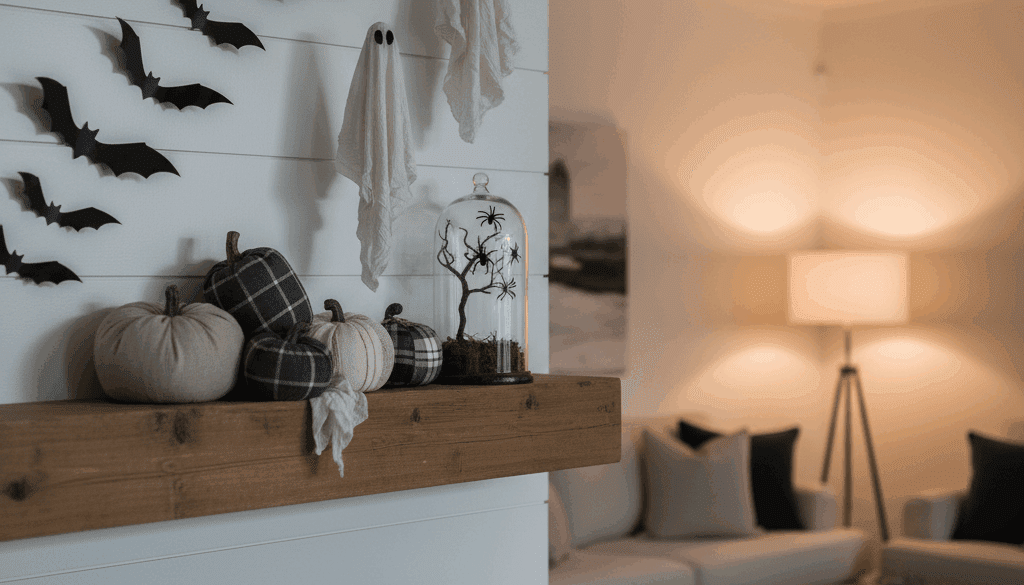
Forget the classic orange pumpkin. These fabric pumpkins are the cornerstone of farmhouse fall and Halloween decor. They are incredibly versatile, endlessly customizable, and add a touch of cozy, textural charm to any surface. I have a whole basket of these that I bring out every September, and they instantly make my home feel like autumn.
Step-by-Step Instructions:
- Choose Your Fabric: This is the fun part! Look for fabrics that fit the modern farmhouse aesthetic. Think neutral plaids, ticking stripes, simple linen, grain sack cloth, or even drop cloth canvas. You’ll need a circle of fabric for each pumpkin. A good rule of thumb is to make the diameter of your circle about twice the size of your desired finished pumpkin.
- Cut Your Circle: Lay your fabric flat and use a large plate or a round platter as a template to trace and cut a perfect circle. Don’t worry about it being flawless; the rustic look is part of the charm.
- Sew Your Seam (or Don’t!): Using a needle and thick thread (like embroidery floss), sew a loose running stitch all the way around the outer edge of your fabric circle, about a half-inch from the edge. Once you’ve gone all the way around, gently pull the thread to cinch the fabric, leaving an opening large enough for stuffing. For a no-sew option, you can achieve a similar effect with a hot glue gun, but sewing provides a more durable finish.
- Stuff Your Pumpkin: Fill the pumpkin with polyester fiberfill. Pack it in tightly to get a nice, firm shape. You can also add a small pouch of rice or beans to the bottom before stuffing to give your pumpkin some weight and help it sit flat.
- Close and Shape: Pull your thread tight to close the opening completely and tie a secure knot. Now, to create the classic pumpkin ridges, take a long piece of embroidery floss and a long needle. Push the needle up through the bottom center of the pumpkin and out the top center. Wrap the floss down the outside and back up through the bottom, pulling tightly to create an indent. Repeat this process 4-5 times, spacing your stitches evenly around the pumpkin to create segments.

Add a Stem: The stem is the finishing touch! A real twig, a piece of driftwood, or a few cinnamon sticks bundled together with twine make for a perfect, rustic stem. Use a generous amount of hot glue to secure it to the top center of your pumpkin.
Tips and Tricks:
- Mix and Match: Create a whole patch of pumpkins in varying sizes and coordinating fabrics for a beautiful display.
- Add Embellishments: For a subtle Halloween touch, tie a small black ribbon or a piece of jute twine around the stem.
- Scented Pumpkins: Add a few drops of cinnamon or clove essential oil to the fiberfill before stuffing for a lovely autumnal scent.

DIY Project 2: Rustic Bat Silhouette Wall Art
This project is a personal favorite because it delivers a huge visual impact for very little effort and cost. A swarm of bats ascending a wall or chimney breast is a dramatic and surprisingly chic way to add a spooky touch. It’s a fantastic alternative to a traditional wreath on your front door or as a focal point above a console table.
Step-by-Step Instructions:
- Find a Template: Search online for a ‘bat silhouette template’. You’ll find hundreds of options. Choose one or two different shapes and sizes to create a more dynamic, natural-looking swarm. Print them out on regular paper and cut them out.
- Trace and Cut: Using your paper templates, trace the bat shapes onto heavy-duty matte black cardstock. The matte finish is crucial—it absorbs light and looks much more sophisticated than glossy paper. Carefully cut out the bats. This is a great step to do while watching a spooky movie! I recommend cutting at least 20-30 bats of various sizes.
- Give Them Life: To make the bats look like they’re in flight, fold each one gently in the middle to create a slight crease down the body. Then, fold the wings up slightly on either side of the crease. This gives them a 3D effect that will cast subtle shadows on your wall.

- Plan Your Swarm: Before you start sticking them to the wall, lay your bats out on the floor to plan your design. A great swarm pattern often starts clustered together in one corner and then fans out and upwards, as if they are flying out of a chimney or a window.
- Mount Them: Use a small piece of removable mounting putty or double-sided tape on the back of each bat’s body. Press them firmly onto the wall according to your planned design. Using removable adhesive is key to ensure you don’t damage your paint when it’s time to take them down.
Pros and Cons:
- Pros: Incredibly affordable, high-impact, completely customizable to your space, and easy to remove without damage.
- Cons: Cutting out many bats can be time-consuming, and they may not stick well to highly textured walls like brick or plaster.
For a more permanent piece of art, you can mount the bats onto a large, distressed wooden board or an old window frame. This creates a contained piece of art you can hang up year after year.

DIY Project 3: Ethereal Floating Cheesecloth Ghosts
These are not your childhood bedsheet ghosts. Made from cheesecloth, these ethereal figures have a semi-transparent, wispy quality that makes them look like they are genuinely floating through your home. They are delicate, haunting, and a perfect example of subtle, sophisticated spookiness. A garland of them draped across a mantelpiece or a single larger one ‘floating’ in a corner can be incredibly effective.
Step-by-Step Instructions:
- Set Up Your Workspace: This project can get a bit messy, so cover your work surface with a plastic tablecloth or garbage bags.
- Create Your Ghost Forms: You need to create a form for the cheesecloth to dry on. A simple way to do this is to place a small styrofoam ball or a balloon on top of a bottle (like a wine or soda bottle). This creates the head and the draped body shape. You can add wire arms by poking a piece of craft wire through the styrofoam ball if you want to give your ghosts more defined shapes.
- Prepare the Stiffener: In a large bowl, mix your fabric stiffener. You can use a commercial product, but a simple solution of liquid starch or a 50/50 mix of white school glue and water works perfectly. I personally prefer liquid starch for a slightly less rigid finish.
- Drape the Cheesecloth: Cut a square of cheesecloth. The size will depend on how large and ‘drapey’ you want your ghost to be; a 12×12 inch square is a good starting point for small ghosts. Submerge the cheesecloth completely in the stiffener mixture, making sure it’s fully saturated. Squeeze out the excess liquid, but don’t wring it dry.
- Form the Ghost: Carefully drape the damp cheesecloth over your form. Arrange the folds and drapes how you want them to look when dry. Let the bottom puddle and crinkle on your work surface—this will form the base that allows the ghost to stand on its own once it’s dry.

- Let It Dry: This is the most important step! Let the cheesecloth dry completely. This can take 24 hours. Be patient. Once it is completely stiff and dry, you can gently lift it off the form. The form (bottle and ball) will slip right out, leaving a hollow, rigid ghost.
- Add Eyes and Hang: Use a black marker or small dots of black paint to add simple eyes. To hang them as a garland, simply poke a needle with clear fishing line through the top of their heads and string them together.

These ghosts look particularly magical when placed near a window where the light can filter through them or near a lamp where they can cast spooky shadows.
DIY Project 4: The Enchanted Spooky Terrarium
A terrarium or cloche offers a wonderful opportunity to create a miniature world. For Halloween, we can transform it into a tiny, contained haunted scene—a piece of decor that invites closer inspection and adds a touch of gothic elegance to a coffee table, bookshelf, or entryway.
Step-by-Step Instructions:
- Choose Your Vessel: A glass cloche with a wooden base is ideal for a modern farmhouse look. You can also use a bell jar, a glass apothecary jar, or even a large mason jar. The key is that it’s clear glass, allowing a full view of your scene.
- Build Your Base: Start by creating the ‘ground’ for your scene. A layer of dried moss (available at craft stores) is perfect. You can also use small pebbles, soil, or black craft sand for a more desolate look.
- Select a Focal Point: Every miniature scene needs a star. This could be a tiny, spooky model house (often found in the Christmas village section of craft stores and painted black or grey), a small, handcrafted tombstone made from clay, or even just a gnarled, spooky-looking twig that looks like a haunted tree.
- Add Supporting Details: Now, flesh out the scene. Add smaller twigs for fallen branches, tiny faux pumpkins, a miniature skeleton peeking out from behind the ‘tree’, or a small plastic crow perched on the tombstone. The key is to play with scale and not overcrowd the space. Less is often more.
- Create Atmosphere: For a final touch, you can gently pull apart a cotton ball to create a thin, wispy ‘fog’ that settles on the ground. A tiny strand of battery-powered fairy lights (with a warm white or orange glow) can be tucked into the moss to illuminate the scene from within, creating a magical and eerie effect.
- Cover and Display: Once you’re happy with your arrangement, carefully place the glass cloche over the top. Display it in a prominent place where guests can admire your tiny, spooky world.
Tips and Tricks:
- Forage for Supplies: Go on a nature walk to find the perfect gnarled twigs, interesting seed pods, or small stones for your terrarium. It’s free and adds an authentic touch.
- Tell a Story: Think about the story your terrarium tells. Is it a haunted forest? A tiny pet cemetery? A witch’s garden? Having a narrative in mind helps you choose cohesive elements.
- Lighting is Everything: The addition of micro fairy lights truly elevates this project from a simple craft to a stunning piece of decor, especially in the evening.

Frequently Asked Questions
How can I make these DIY projects more kid-friendly?
For the fabric pumpkins, use the no-sew hot glue method and let kids do the stuffing. For the bat art, let them trace and cut out the bats (with safety scissors) and help plan the swarm on the floor. The cheesecloth ghosts can be fun if you use the non-toxic glue-and-water mix, but an adult should handle the saturated cloth.
What’s the best way to store these DIY decorations after Halloween?
Careful storage is key to making them last. For the fabric pumpkins and bat cutouts, a simple bin is fine. For the delicate cheesecloth ghosts and the terrarium, I recommend wrapping them loosely in tissue paper and storing them in a sturdy box so they don’t get crushed. Make sure they are stored in a dry, temperature-controlled area.
Can I use real pumpkins and natural elements in these projects?
Absolutely! A real pumpkin stem looks fantastic on a fabric pumpkin. You can also incorporate real mini pumpkins and gourds into your vignettes and terrariums. Just be aware that they won’t last until next year, so you’ll have to discard or compost them at the end of the season.
People Also Ask
How do you decorate for Halloween in a classy way?
The key to classy Halloween decor is subtlety and a cohesive color palette. Stick to a limited color scheme (like black, white, and metallics), use natural textures like wood and linen, and choose suggestive spooky elements (like silhouettes and shadows) over gory or cartoonish decorations.
What are the colors for modern farmhouse Halloween?
Modern farmhouse Halloween colors steer away from tradition. The primary palette includes soft whites, creams, charcoal black, and shades of grey. Accent colors are often muted, earthy tones like moss green, rust, or deep navy, complemented by natural wood and metallic finishes.
How can I make my house look spooky but not tacky?
Focus on atmosphere over objects. Use dim, warm lighting with candles (or LED versions) and lanterns to create shadows. Incorporate natural, slightly decaying elements like dried hydrangeas or gnarled branches. Drape ethereal fabrics like cheesecloth. A few well-placed, high-quality items will look much spookier than a house full of cheap plastic decorations.
Conclusion
Embracing a modern farmhouse aesthetic for Halloween doesn’t mean sacrificing the fun and spookiness of the holiday. It’s about redefining it. By focusing on a neutral palette, rich textures, and handmade charm, you can create a home that feels both festive and effortlessly chic. These DIY projects are more than just crafts; they are invitations to slow down, create something beautiful with your own hands, and curate a space that truly reflects your personal style. So, put on a spooky playlist, gather your materials, and get ready to craft a Halloween that is uniquely and beautifully yours. Which of these projects are you most excited to try first? Let me know in the comments below!