How to Dress Up Your Pet for Halloween: A Guide to Spooky Style
Table of Contents
- Safety First: The Golden Rules of Pet Costumes
- Essential Materials & Tools for DIY Pet Costumes
- Step-by-Step DIY Pet Costume Ideas
- No-Sew & Low-Effort Costume Hacks for Busy Pet Parents
- Choosing the Perfect Store-Bought Costume
- Frequently Asked Questions
- People Also Ask
Introduction
The crisp autumn air has arrived, leaves are starting to turn, and that familiar spooky excitement is building. Halloween isn’t just for kids and candy anymore; it’s a full-blown celebration for the entire family, including our four-legged members! I’ll never forget the first time I tried to dress up my beagle, Barnaby. I’d spent hours crafting an elaborate pirate costume, complete with a tiny felt hat. The moment I put it on him, he gave me a look of such profound betrayal before promptly shaking the hat off and using the eye patch as a chew toy. It was a hilarious failure, but it taught me a valuable lesson: pet costumes are all about comfort, safety, and celebrating your pet’s unique personality, not creating a perfect photo op.
That’s why I’ve put together this ultimate guide to dressing up your pet for Halloween. We’re moving beyond the Pinterest-perfect pressure and focusing on fun, safety, and creativity. Whether you’re a seasoned DIY pro ready to break out the glue gun or a busy pet parent looking for a quick and adorable solution, this guide has you covered. We’ll walk through the absolute must-know safety rules to ensure your furry friend has a blast, not a stressful experience.
From there, we’ll dive into some fantastic, easy-to-follow DIY costume ideas, complete with step-by-step instructions for everything from classic bat wings to a heroic superhero cape. We’ll even cover some brilliant no-sew hacks for those who are short on time but not on Halloween spirit. And if DIY isn’t your thing, I’ll share my expert tips for choosing a safe, comfortable, and hilarious store-bought costume. Get ready to make this Halloween the most memorable one yet for you and your beloved companion!
Essential Materials & Tools for DIY Pet Costumes
This post contains affiliate links. If you use these links to buy something, we may earn a commission. Thanks.
- Soft Felt Sheets (Assorted Colors) – Find on Amazon
- Adhesive Velcro Strips – Find on Amazon
- Non-Toxic Fabric Glue – Find on Amazon
- Pet-Safe, Non-Toxic Craft Paint – Find on Amazon
- Fabric Scissors – Find on Amazon
- Flexible Measuring Tape – Find on Amazon
- Soft Elastic Bands – Find on Amazon
- Mini Hot Glue Gun – Find on Amazon
Money-Saving Tip!
Before you buy any materials online, sign up for Rakuten (formerly Ebates) to get cash back on your purchases from hundreds of stores. It’s a free and easy way to save a little extra on all your DIY projects! Sign up here!
Safety First: The Golden Rules of Pet Costumes
Before we even think about fabric and glue, let’s talk about the most important aspect of pet costumes: safety and comfort. A stressed or uncomfortable pet will ruin the fun for everyone. Following these golden rules ensures Halloween is a treat, not a trick, for your furry friend.
1. Prioritize Comfort and Mobility: The costume should never restrict your pet’s ability to move, breathe, see, or hear. Avoid anything that is too tight around the neck, chest, or legs. Your pet should be able to walk, run, jump, and lie down comfortably. If a costume requires a mask, ensure the eye and nose holes are large and don’t impede vision or breathing in any way. A good test is to see if you can comfortably fit two fingers between the costume and your pet’s body.
2. Watch for Choking Hazards: Ditch any costumes with small, dangling, or easily chewable parts like buttons, sequins, or bells. Pets, especially puppies and kittens, explore with their mouths. A loose piece can quickly become a choking hazard or cause an intestinal blockage if swallowed. Opt for decorations that are securely sewn or glued on, or better yet, painted on with non-toxic, pet-safe paint.
3. Introduce it Slowly: Never force a costume onto your pet. A few days before Halloween, let them sniff and investigate the costume. Then, try putting it on them for just a minute or two, offering plenty of praise and high-value treats. Gradually increase the duration each day. This positive association will make them much more accepting on the big night.
4. Monitor for Stress Signals: Pay close attention to your pet’s body language. Signs of stress include a tucked tail, flattened ears, wide eyes, excessive panting, hiding, or trying to bite or scratch the costume off. If you see any of these signals, remove the costume immediately. For some pets, a simple festive bandana is the perfect ‘costume.’
5. Avoid Overheating: Consider your pet’s breed and the climate. A husky in a full-body fleece costume on a warm evening is a recipe for overheating. Choose lightweight, breathable fabrics. If the costume covers a large portion of their body, make sure they only wear it for short periods, especially if they are active.
Step-by-Step DIY Pet Costume Ideas
Now for the fun part! Creating a costume yourself allows you to customize the fit perfectly and ensure it’s made from comfortable materials. Here are a few simple yet adorable ideas to get you started.
### Classic Bat Wings (Perfect for Cats & Dogs)
This is a Halloween staple for a reason—it’s easy, comfortable, and instantly recognizable.
* Step 1: Create a Template. Draw a bat wing shape on a piece of paper or cardboard. Hold it up to your pet’s back to gauge the right size. It should be proportional but not so large that it gets in the way of their movement.
* Step 2: Cut the Felt. Place your template on a sheet of black felt and cut out two identical wing shapes. Felt is a great material because it’s lightweight and doesn’t fray.
* Step 3: Assemble the Wings. Cut a small, rectangular piece of felt to act as the ‘spine’ or base. Use a hot glue gun or non-toxic fabric glue to attach the base of each wing to this center piece. This creates a single, sturdy wing set.
* Step 4: Add the Straps. Measure two pieces of soft elastic: one to go around your pet’s chest (behind the front legs) and a smaller one for the neck. Securely glue or sew these elastic loops to the bottom of the wing base. Alternatively, you can use long Velcro straps for a more adjustable fit.

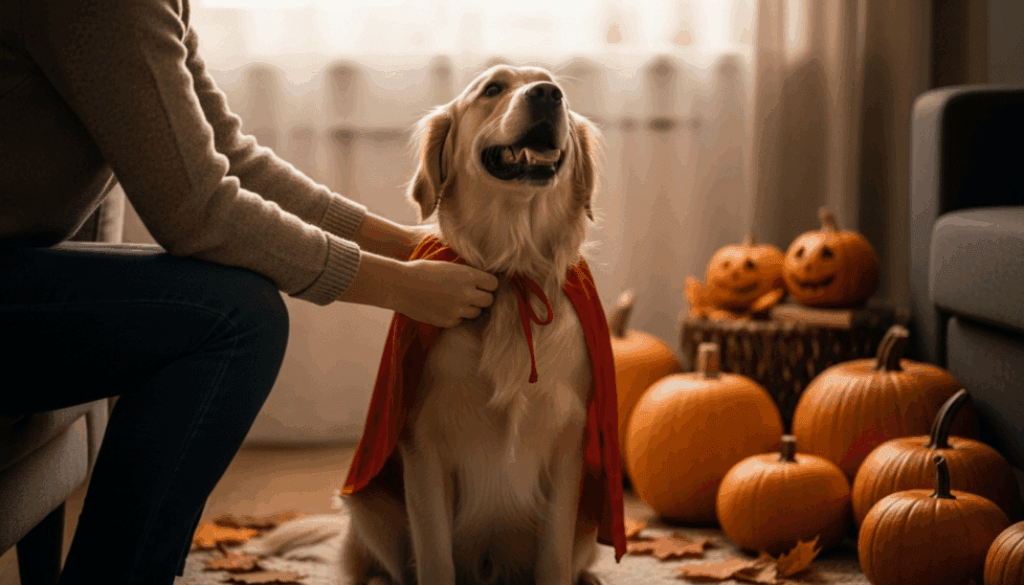
### Superhero Cape (Great for All Pets)
Let your pet’s inner hero shine with a cape that’s easy to make and wear.
* Step 1: Measure and Cut. Choose a lightweight fabric in a heroic color like red or blue. Measure from the base of your pet’s neck to their mid-back or tail, depending on your desired cape length. Cut the fabric into a classic cape shape (a rectangle with the bottom corners rounded is a simple option).
* Step 2: Create the Neckband. Use a soft ribbon or a strip of the same fabric for the neckband. Attach it to the top corners of the cape. Ensure it’s long enough to tie loosely in a bow, or add Velcro tabs for easy on-and-off.
* Step 3: Decorate! This is where you can get creative. Cut your pet’s initial or a lightning bolt out of a contrasting color of felt and glue it to the center of the cape. Use non-toxic fabric markers or paint for extra details. While we often talk about the importance of safe paints when you tackle a project like painting a door, those principles are even more critical when creating something your pet will wear.

### Witch or Wizard Hat (For Patient Pets)
This accessory adds a touch of magic, but is best for pets who are tolerant of things on their head.
* Step 1: Make the Cone. Cut a circle out of black felt. Cut a slit to the center and roll it into a cone shape, securing with hot glue. Trim the bottom so it sits flat.
* Step 2: Create the Brim. Cut a larger felt circle for the brim. Then, cut a smaller circle out of its center that is slightly smaller than the base of your cone.
* Step 3: Assemble the Hat. Glue the cone onto the brim. Let it dry completely.
* Step 4: Add a Strap & Decorations. Attach a thin, soft elastic strap to the brim to hold it gently under your pet’s chin. Decorate the hat with a colorful ribbon. For a truly special touch, you can learn how to make a bow with wired ribbon and add it for extra flair.

No-Sew & Low-Effort Costume Hacks
Don’t have the time or skill for a full DIY project? No problem! You can still create a fantastic costume with these simple hacks.
The Ghost: This is the ultimate last-minute costume. Take an old white pillowcase or t-shirt and drape it over your pet. Mark where their eyes and nose are, then take it off and cut out the holes. Be sure the holes are large and that the fabric is short enough that they won’t trip on it. This is best for very calm dogs and for short-term photo ops only.
The Beanie Baby: This is clever, cute, and incredibly easy. Create the iconic red ‘Ty’ tag from red cardstock or felt. Use a white paint pen to write the ‘Ty’ logo. Punch a hole in it and attach it to your pet’s collar with a ribbon. Instant costume!
The Business Pet: Have a spare collar and tie? Or a child’s clip-on bowtie? Simply put it on your dog for an instant ‘Business Dog’ look. It’s simple, comfortable, and always gets a laugh.
The Flower Child: For a sweet and simple look, use a festive collar or create a simple flower crown. You can attach silk flowers to a soft, stretchy headband or their existing collar. Just ensure all pieces are securely attached and there’s nothing they can chew off.
Remember, the goal is to have fun. Even a simple Halloween-themed bandana can be a perfect ‘costume’ for a pet who prefers a minimalist approach to fashion. Selecting the right materials is key. Just as you’d carefully choose your products when learning how to paint furniture, you should be just as selective with the fabrics and accessories you put on your pet.
Choosing the Perfect Store-Bought Costume
If you’re opting for a store-bought costume, a little bit of savvy shopping can make all the difference between a happy pet and a Halloween disaster. The market is flooded with options, but not all are created equal.
### What to Look For:
* Accurate Sizing: Don’t just guess. Use a flexible measuring tape to measure your pet’s neck, chest girth, and length (from the neck to the base of the tail). Compare these measurements to the manufacturer’s size chart. A costume that’s too tight is dangerous, and one that’s too loose can be a tripping hazard.
* Soft, Breathable Materials: Feel the fabric. Is it soft and flexible, or stiff and scratchy? Look for materials like cotton, fleece, or jersey knit. Avoid materials that feel like cheap plastic, as they don’t breathe well and can cause your pet to overheat.
* Minimal Embellishments: Just like with DIY costumes, look out for small, glued-on parts that can be easily chewed off. Well-sewn seams and printed designs are much safer than costumes covered in glitter, beads, or plastic gems.
* Easy to Put On and Take Off: Look for costumes with large openings and simple closures like Velcro tabs. Costumes that require you to pull multiple paws through tight holes can be very stressful for animals. The easier it is to get on, the happier your pet will be.

### Popular & Safe Store-Bought Ideas:
* Rider Costumes: These are hilarious and often more comfortable for dogs. A small character (like a cowboy or a jockey) sits on a harness on their back, leaving their head and legs completely free.
* Lion Manes: A simple mane that fits around a cat’s or dog’s head is an easy way to transform them into the king of the jungle without a restrictive full-body costume.
* Themed Hoodies: A simple hoodie with dinosaur spikes, shark fins, or teddy bear ears is a great option. It keeps them warm and feels similar to a regular dog coat, making them more likely to accept it.
Always read the reviews before buying. Other pet owners will often give honest feedback about the sizing, quality, and, most importantly, whether their pets tolerated wearing it.
Frequently Asked Questions
How do I know if my pet is uncomfortable in its costume?
Watch their body language closely. Signs of discomfort or stress include a tucked tail, flattened ears, wide ‘whale’ eyes, hiding, refusing to move, or trying to bite or scratch the costume off. If you see any of these signs, remove the costume immediately.
Can I use regular craft glue or paint on a pet costume?
It’s crucial to use only non-toxic materials. Opt for non-toxic fabric glue and pet-safe, water-based paints or markers. Pets can lick or chew on their costumes, and you want to avoid any risk of them ingesting harmful chemicals.
How long should my pet wear their costume?
Only for short, supervised periods. Putting it on for a quick photoshoot or for the 20 minutes that trick-or-treaters are at the door is plenty. Never leave your pet unattended in a costume, as straps can get caught on furniture, posing a strangulation risk.
What are the best costume ideas for pets who hate wearing clothes?
For costume-averse pets, less is more! A simple Halloween-themed bandana, a festive collar charm, or a simple bow tie are all excellent options. The ‘Beanie Baby’ tag attached to their collar is another brilliant, non-invasive idea.
People Also Ask
Is it cruel to put a costume on a pet?
It depends entirely on the individual pet and the costume. If the pet is showing signs of distress, fear, or discomfort, then yes, it is cruel to force them to wear it. However, if the costume is safe, comfortable, and the pet is relaxed and happy (or at least tolerant), it can be a fun bonding activity for both pet and owner.
What is the most popular pet costume?
Year after year, some of the most popular pet costumes include pumpkins, hot dogs, superheroes, and lions. Rider costumes, where a small doll appears to be riding the pet, have also become extremely popular due to their clever and humorous appearance.
How do you make a last-minute pet costume?
The easiest last-minute costume is the ‘Beanie Baby’ tag made from cardstock and attached to your pet’s collar. Another quick option is the classic ghost, made by cutting eyeholes in an old white sheet or pillowcase (for supervised use only). A simple festive bandana is also a great zero-effort choice.
Conclusion
Dressing up your pet for Halloween should be a joyful expression of your shared bond, not a source of stress. Whether you’ve crafted a masterpiece with your own two hands or found the perfect store-bought ensemble, the golden rules always apply: prioritize safety, ensure comfort, and respect your pet’s boundaries. The best costume is one your pet happily wears. From spooky bat wings to heroic capes, the possibilities are endless for making incredible memories. Now go have some spooky fun! What are you planning to dress your pet up as this year? Share your creative ideas in the comments below!